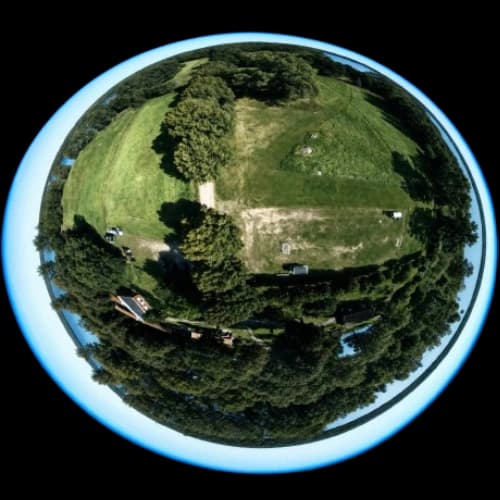
Wide-angle Cameras
Wide-angle cameras provide a broad field of view, ideal for monitoring large areas and
boosting situational awareness. Traditionally, distortion and resolution loss have limited their
effectiveness – but our advanced onboard software overcomes these challenges in real
time, directly on the drone.
By eliminating distortion and preserving detail across the full image, we unlock the full
potential of wide-angle optics – enabling clear, stable, and comprehensive coverage from a
single camera feed (or multiple!).
This also enhances the performance of AI, which can analyze the entire wide-angle field of
view at once, identifying threats and anomalies across the whole scene without missing
critical context.
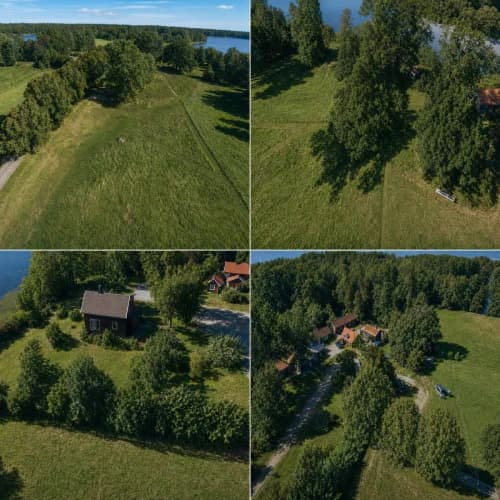
Multi-view Extraction
Our multi-view extraction technology enables the creation of multiple digitally stabilized
views from a single wide-angle field of view – or even from a combined feed of multiple
cameras for an expanded perspective.
Operators can isolate and focus on several areas of interest within the scene, each with its
own clear and stable viewport. This allows for continuous tracking of key targets while
maintaining awareness of the full environment – without relying on mechanical gimbals or
additional hardware complexity.
By transforming a single, expansive input into multiple intelligent outputs, this technology
delivers real-time, actionable intelligence and enhances the performance of downstream AI
systems. It simplifies drone payloads while dramatically improving coverage, flexibility, and
response time in high-pressure scenarios.
AI-driven Analysis
Our AI system is designed to analyze the entire wide-angle field of view in real time –
providing full-scene awareness instead of just isolated detections. This ensures faster, more
reliable identification of anomalies, objects, and points of interest across dynamic
environments.
What makes our approach unique is its modular design. Users can upload and run their own
trained AI models directly on the drone, tailoring the system to specific missions or
environments. Our advanced post-processing layer enriches AI outputs with actionable
metadata – such as each detection's relative position to the drone. This spatial context can
be used to support autonomous navigation, target handoff, or sensor fusion, turning visual
data into real operational intelligence.
This flexibility transforms AI from a passive observer into an active intelligence tool, fully
integrated with both the drone and the mission.
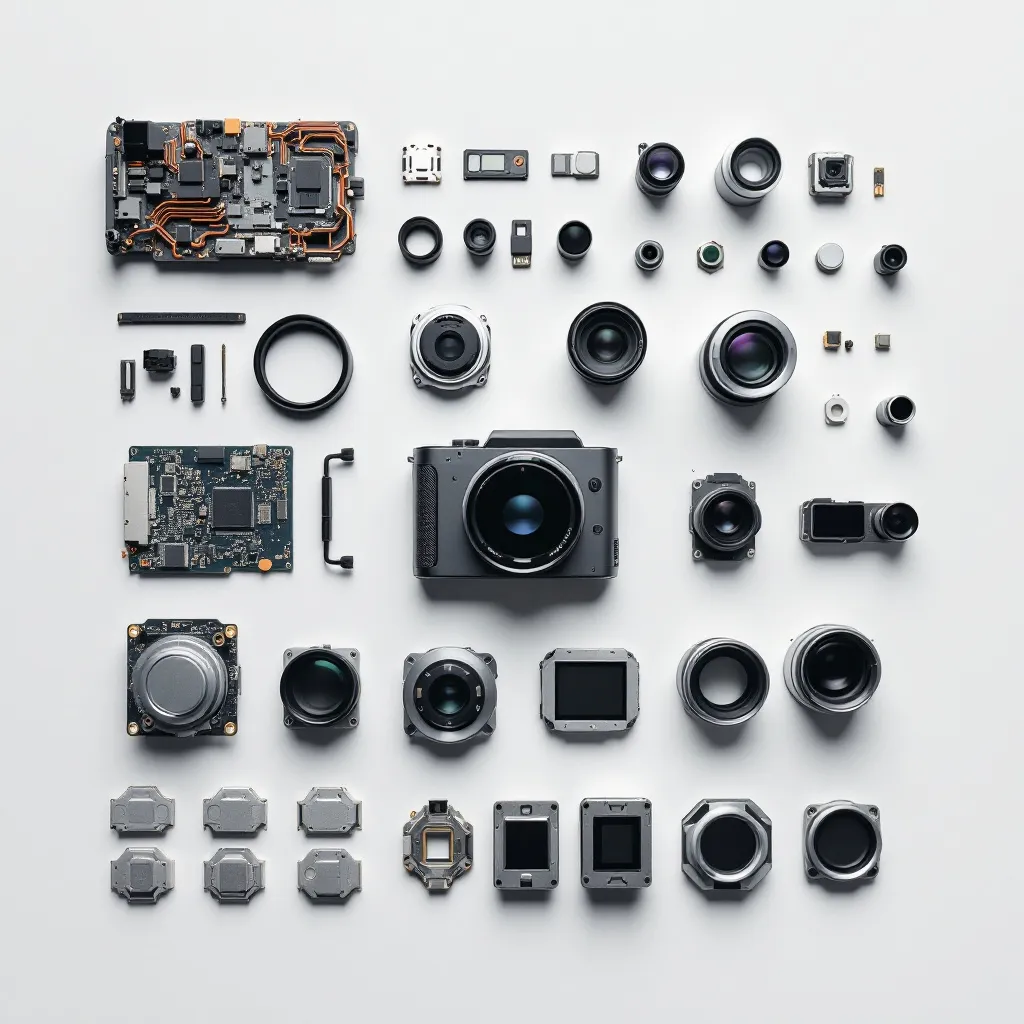
Modular Architecture
Our system is built with a modular architecture that allows for flexible configuration based on
mission needs. Camera sensors and lenses can be selected to match specific operational
scenarios, making it easy to adapt the system without redesigning the platform.
This modularity isn't just about customization – it also streamlines integration. Drone
manufacturers can choose the setup that fits their use case, with minimal effort to embed it
into existing systems. Once integrated, the system is designed to work seamlessly alongside
other payloads, including gimballed cameras.
In fact, our wide-angle view is ideal for guiding gimbals, enabling faster target acquisition
and more efficient ISR missions. By using the full-scene overview to direct high-detail
sensors, the system boosts situational awareness and responsiveness in real time.